



Navigating the Swiss Real Estate Market in 2026: A Blueprint for Resilience and Yield
As we navigate the first half of 2026, the global economic landscape continues to be defined by a single, unwavering constant: uncertainty. Looking back at 2025, international markets were heavily burdened by aggressive US import tariffs, which sent shockwaves through export-oriented economies worldwide. Today, as geopolitical frictions—particularly the intensifying conflicts in the Middle East—dominate the headlines, commodity markets have been pushed into a state of extreme volatility. Across Europe, the specter of stagflation looms large, effectively smothering the economic recovery many had prematurely priced in.
Yet, against this turbulent backdrop, one asset class continues to stand out as a premier safe harbor: the Swiss real estate market. In my decade of experience structuring capital allocations and analyzing property cycles, I have rarely seen a convergence of global instability and local resilience quite like what we are witnessing in Switzerland today. For institutional investors, family offices, and those engaged in high-level real estate wealth management, the Swiss real estate market is not just a defensive play; it is a foundational pillar for property portfolio diversification in an increasingly unpredictable world.
The Macroeconomic Shield: Why Switzerland Defies Global Gravity
To understand the current strength of the Swiss real estate market, one must first dismantle the macroeconomic architecture that protects it. While neighboring European nations grapple with volatile energy costs and rampant inflation, Switzerland benefits from profound structural insulators. The country’s consumer price basket carries a significantly lower energy weight, and its electricity prices remain highly regulated, shielding consumers and businesses alike from the worst of global commodity spikes.

Furthermore, the Swiss franc (CHF) continues to flex its muscle as the world’s undisputed safe-haven currency. While a formidable franc undeniably applies pressure on Switzerland’s export sector, it simultaneously crushes imported inflation. Moving into 2026, baseline scenarios project Swiss GDP growth to stabilize at a highly respectable 1.1%. More impressively, inflation is forecast to hover around a mere 0.5%—a slight uptick from previous estimates, but still a masterclass in monetary stability compared to the broader Western world.
For participants in the Swiss real estate market, these macroeconomic fundamentals translate directly into capital preservation. When inflation is tamed and economic growth remains quietly positive, property valuations do not suffer the violent repricing seen in London, New York, or Frankfurt. Instead, the Swiss real estate market offers investors a highly coveted prize: inflation-protected, predictable rental income supported by an exceptionally stable underlying economy.
Capital Flows and Transactional Dominance in 2025
The underlying strength of the Swiss economy triggered a phenomenal wave of capital deployment last year. The Swiss real estate market witnessed exceptionally high activity throughout 2025, with capital market transactions shattering previous volume records. Institutional capital, seeking refuge from equity market volatility and bond yield fluctuations, aggressively targeted domestic brick-and-mortar assets.
Residential property funds, in particular, were the darlings of the investment community, commanding significant and rising premiums. We observed aggressive yield compression across defensive segments, which is a classic hallmark of outsized demand chasing a limited supply of stable, well-leased properties. Even in a shifting interest rate environment, the appetite for core and core-plus assets in the Swiss real estate market remained insatiable.
Looking ahead through 2026, this demand profile shows absolutely no signs of structural fatigue. Global investors recognize that commercial property investment in Switzerland provides a unique dual benefit: downside protection via strict regulatory frameworks and steady upside through methodical rent growth. When turbulence strikes global equities, the intrinsic value of physical, income-producing assets in a stable jurisdiction becomes the ultimate currency.
The Residential Sector: Demographics, Scarcity, and the Urban Squeeze
If you want to understand the engine room of the Swiss real estate market, look no further than the residential sector. The demand for urban residential space is not merely a cyclical trend; it is a profound structural reality driven by unstoppable demographic forces.
While net immigration in 2025 cooled slightly from the historic peaks of previous years, the influx of highly skilled labor remains significantly above the long-term historical average. Switzerland remains a magnet for global talent, pharmaceutical executives, tech innovators, and financial professionals. This sustained population growth acts as a perpetual tailwind for the Swiss real estate market.
Coupled with immigration is the ongoing micro-trend of individualization—more people choosing to live alone—alongside an aging population that requires modified living arrangements. This creates a hyper-concentrated demand in major urban agglomerations. The housing markets in Zurich, Geneva, Basel, and Lausanne are experiencing an acute supply-demand imbalance. Permitting processes remain notoriously stringent, topography naturally limits urban sprawl, and construction costs have kept speculative development tightly in check.
As a direct consequence, residential vacancy rates across the Swiss real estate market are actively falling. We are seeing rents rise across almost all cantons and regions. Furthermore, as long-term interest rates have adjusted, the official mortgage reference rate is highly likely to edge upward again in the second half of 2026. Under Swiss tenancy law, an increase in the mortgage reference rate allows landlords to legitimately pass on rent increases to existing tenants. For those engaged in property portfolio diversification, this mechanism makes the Swiss residential sector a highly effective hedge against inflation and rising debt costs.
Commercial Real Estate: Defying the Global Office Apocalypse
One of the most fascinating aspects of the Swiss real estate market is how its commercial sector has completely decoupled from the prevailing global narrative. Over the past decade, and particularly accelerated by the pandemic, global commercial rental markets have been battered by structural shifts. In the United States and parts of the Eurozone, the entrenchment of remote and mobile working has decimated office demand, leaving central business districts struggling with record-high vacancy rates. Simultaneously, the relentless expansion of e-commerce has fundamentally challenged the viability of traditional brick-and-mortar retail space, even as it turbocharges the logistics and industrial sectors.
However, the Swiss real estate market tells a remarkably different story. In both a historical and international context, Switzerland’s commercial property sectors remain remarkably robust. Why? The answer lies in the country’s exceptional labor market and cultural business practices. Shorter average commute times, highly efficient public transportation, and a strong corporate culture have kept office utilization rates in Switzerland significantly higher than in peer nations.
Moreover, the robust population growth that fuels the residential sector spills directly over into the commercial realm. More residents mean a larger labor force requiring workspace, and a larger consumer base driving retail and service consumption. This macroeconomic synergy provides substantial tailwinds for commercial property investment across the country.
That is not to say the sector is without nuance. To succeed in the commercial tranche of the Swiss real estate market today, sophisticated real estate asset management is non-negotiable. Passive capital allocation is no longer sufficient. Investors must actively curate their spaces, ensuring high ESG (Environmental, Social, and Governance) compliance, flexible floorplates, and premium tenant amenities.
For those willing to deploy active management strategies, the commercial segment of the Swiss real estate market offers incredibly compelling acquisition opportunities. Compared to the hyper-compressed yields of the residential sector, commercial properties provide materially more attractive running income yields and superior risk premia. Furthermore, commercial leases in Switzerland are typically strictly indexed to inflation, offering institutional landlords an automated defense mechanism against purchasing power erosion. When backed by commercial real estate loans structured efficiently in the current rate environment, the leveraged returns on prime Swiss office and logistics assets are exceptionally attractive.
Strategic Outlook: A Stable Anchor in Volatile Waters
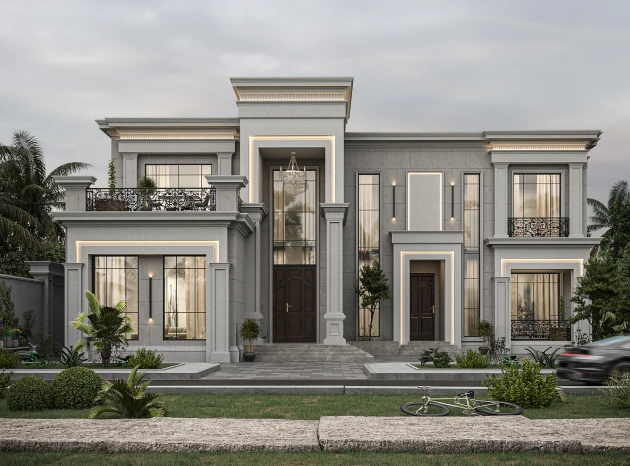
As we project our thesis for the remainder of 2026, the narrative for the Swiss real estate market is one of measured, confident optimism. Despite the upward pressure on long-term interest rates born from geopolitical conflicts and macro volatility, we anticipate positive capital value growth across the Swiss property sector, albeit at a slightly more moderated pace than the record-breaking trajectory of 2025.
The fundamentals underpinning the residential segment are virtually unshakeable. The chronic undersupply of urban housing guarantees that residential assets will likely continue to deliver higher absolute capital growth. However, increasing regulatory scrutiny and the political discourse surrounding affordable housing mean that investors must navigate this space with acute local intelligence.
Conversely, commercial properties within the Swiss real estate market stand out as the definitive yield play. Given the robust economic fundamentals, moderate valuations relative to global gateway cities, and the protection of inflation-linked long-term leases, commercial real estate represents an unparalleled opportunity. The spread between commercial yields and residential cap rates has widened just enough to reward investors who have the operational expertise to execute rigorous asset management plans.
Ultimately, the Swiss real estate market in 2026 is exactly what global capital is desperately searching for: a stable anchor. It is a market defined by quality, underwritten by a fortress-like national economy, and sustained by irreversible demographic trends. Whether you are seeking the capital preservation inherent in Zurich real estate or the yield premiums available in regional logistics hubs, Switzerland remains the gold standard for real estate investment.
In a financial world where uncertainty has become the only constant, hoping for stability is not an investment strategy. You need actionable insights, precise local market intelligence, and a disciplined approach to asset allocation. If you are ready to explore how high-conviction commercial property investment or targeted residential acquisitions can insulate and grow your wealth in 2026, it is time to take decisive action. Connect with our advisory team today to discuss how we can optimize your real estate asset management strategy and position your portfolio for enduring success in the Swiss market.