



Navigating the 2026 Swiss Real Estate Market: An Expert Investment Outlook
Over the past decade of analyzing European property cycles and guiding institutional capital, I have rarely seen a macroeconomic environment as bifurcated as the one we face in the first half of 2026. Across the globe, economic policy uncertainty has evolved from a temporary disruption into a permanent fixture of the financial landscape. Following the aggressive US import tariffs enacted in 2025, export-oriented economies have faced intense pressure. Coupled with the escalation of geopolitical conflicts in the Middle East, commodity markets have been driven into states of extreme volatility, reviving dormant fears of global stagflation. The broader European continent is feeling these headwinds acutely, with sluggish indicators dampening the hopes of a swift economic recovery.
Yet, against this turbulent backdrop, the Swiss real estate market stands out as a fortress of stability. While global markets grapple with unpredictable inflation and wavering growth, Switzerland’s structural resilience continues to attract sophisticated capital. For those engaged in wealth management real estate strategies or institutional real estate investing, understanding the unique mechanics of the Swiss property landscape in 2026 is no longer just an option—it is a critical requirement for portfolio preservation and growth.
The Macroeconomic Paradox: Global Volatility vs. Swiss Stability
To truly understand the current trajectory of the Swiss real estate market, one must first look at the broader macroeconomic paradox. Why does Switzerland remain so insulated from the shocks paralyzing neighboring economies?
The answer lies in a combination of structural market features and monetary policy. Switzerland benefits from a notably lower energy share in its consumer price basket and tightly regulated electricity pricing models. These factors act as powerful shock absorbers against the commodity volatility currently wreaking havoc across the Eurozone. Furthermore, the Swiss franc continues to assert its historical dominance as a premier safe-haven currency.
While a strong franc undoubtedly places pressure on Switzerland’s export sector, the domestic economy remains incredibly robust. Our baseline scenario for 2026 projects Swiss GDP growth to stabilize at a healthy 1.1%. Meanwhile, inflation is forecast to come in at a highly manageable 0.5%—slightly above earlier, more optimistic expectations, but still remarkably low compared to international peers.
For the Swiss real estate market, this environment is deeply advantageous. Investors looking for a stable anchor in a volatile environment are increasingly rotating capital into Swiss tangible assets. This macroeconomic stability provides the foundation for highly predictable cash flows, making property investment Switzerland a cornerstone strategy for risk-averse institutional players.
Capital Flows and the Swiss Real Estate Market in 2026
Reflecting on the data from the previous year provides crucial context for 2026. The Swiss real estate market witnessed exceptionally high transaction activity throughout 2025. Capital market transactions shattered previous volume records, driven largely by an insatiable appetite for residential property funds. This surge in demand was starkly reflected in rising fund premiums across the board.
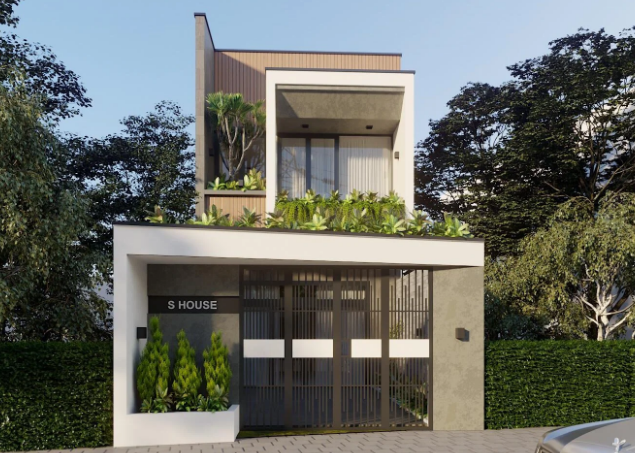
What we are witnessing is a flight to quality. Defensive segments of the Swiss real estate market have experienced continued yield compression. In a traditional financial model, yield compression might signal an overheated market, but in the context of 2026, it is a clear indicator of the massive premium investors are willing to pay for certainty. Well-leased properties situated in prime locations offer something that very few asset classes can currently guarantee: stability.
We fully expect the demand for the Swiss real estate market to remain elevated throughout 2026 and beyond. Property investments here offer uniquely structured, inflation-protected, and highly predictable rental income streams. In times of global turbulence, this asset class provides unparalleled portfolio diversification. Whether executing a direct commercial property investment or allocating capital through listed vehicles, investors are finding that the Swiss real estate market acts as an essential ballast.
The Residential Sector: Structural Scarcity and Demographic Tailwinds
If there is one segment of the Swiss real estate market that perfectly encapsulates the concept of supply-demand imbalance, it is urban residential space. The fundamental drivers of the Swiss residential market are deeply rooted in long-term structural and demographic trends that are practically immune to short-term economic cycles.
While net immigration in 2025 cooled slightly from the historic record highs of the preceding years, it remains significantly above the long-term historical average. This influx of population requires housing, plain and simple. However, immigration is only one piece of the puzzle. Switzerland is simultaneously experiencing profound demographic shifts. The population is aging, leading to longer tenure in existing homes, while a broader societal trend toward individualization is drastically increasing the number of single-person households.
These factors are colliding with an ongoing wave of urbanization. Demand is surging in major economic hubs, turning the Zurich real estate and Geneva property market landscapes into highly competitive arenas. In these urban agglomerations, supply is stubbornly limited. Strict zoning laws, geographic constraints, and a complex permitting process mean that new construction consistently fails to keep pace with household formation.
Consequently, vacancy rates across the Swiss real estate market are continuing their downward trajectory. Rents are rising universally across almost all cantons and municipalities. For landlords and asset managers, this translates to robust net operating income growth. However, it also introduces a layer of regulatory and financial complexity. Given the broader global increase in long-term interest rates, the Swiss mortgage reference rate—a critical benchmark that legally dictates rent adjustments in Switzerland—is highly likely to edge upward again in the second half of 2026.
This reference rate dynamic requires precise real estate asset management. Experienced operators will need to navigate tenant communications and regulatory compliance carefully while capitalizing on the legal frameworks that allow for inflation-adjusted yield growth.
Commercial Property Investment: Why Switzerland Defies Global Headwinds
To appreciate the strength of the commercial Swiss real estate market, we must view it through a global lens. Over the past five to ten years, commercial rental markets worldwide have been battered by severe structural shifts. The explosive rise of mobile and remote working models has structurally impaired demand for traditional office space in cities like New York, London, and San Francisco. Simultaneously, the relentless expansion of e-commerce has severely pressured brick-and-mortar retail footprints.
Adding to these secular shifts is the general macroeconomic malaise and subdued economic momentum that has lingered globally since the pandemic era. While the industrial and logistics sectors have naturally benefited from the e-commerce boom, the broader global commercial real estate narrative has been largely defensive.
Yet, in both a historical context and an international comparison, commercial real estate Switzerland remains remarkably resilient. The persistent population growth that fuels the residential sector creates a powerful ripple effect throughout the broader economy. More residents mean a larger labor force and higher aggregate domestic consumption. This demographic dividend provides distinct tailwinds for the Swiss commercial real estate sector.
Corporate tenant demand in Swiss economic hubs remains healthy. The return-to-office mandates in Switzerland have been met with higher compliance and cultural acceptance than in the US or UK, stabilizing the core office sector. Prime high-street retail in cities like Zurich and Geneva continues to attract luxury brands and high-net-worth foot traffic, insulating it from the broader retail apocalypse.
For institutional capital, commercial property investment in Switzerland currently offers a compelling value proposition. While residential assets have historically provided lower risk, the commercial sector is stepping into the spotlight by offering materially more attractive yield profiles.
ESG Integration and Real Estate Asset Management in 2026
No expert analysis of the 2026 Swiss real estate market would be complete without addressing the undeniable impact of ESG (Environmental, Social, and Governance) mandates. Over the last decade, sustainability has transitioned from a niche marketing term to a core fiduciary duty. In Switzerland, stringent environmental regulations and aggressive decarbonization targets have fundamentally altered the economics of property investment.
Institutional real estate investing now requires a proactive approach to the climate transition. Assets that fail to meet modern energy efficiency standards are facing accelerated obsolescence and widening “brown discounts.” Conversely, fully optimized, green-certified buildings are commanding significant “green premiums” in both rental rates and capital values.
Effective real estate asset management in 2026 relies heavily on implementing smart CapEx (capital expenditure) programs to future-proof portfolios. In the Swiss real estate market, where energy efficiency directly ties into the national strategy of maintaining low consumer inflation, upgrading heating systems, optimizing building envelopes, and integrating renewable energy sources are no longer optional—they are imperative for maintaining yield and asset liquidity.
Strategic Outlook for the Swiss Real Estate Market

As we move deeper into 2026, the strategic outlook remains highly constructive, though not without nuance. Despite the upward pressure on long-term interest rates fueled by ongoing geopolitical conflicts and market volatility, we maintain a firm expectation of positive value growth across the Swiss real estate market. This growth may be somewhat more moderated than the record-breaking capital appreciation witnessed in the previous year, but it remains fundamentally sound.
The underlying metrics in the residential segment remain exceptionally robust. Driven by undeniable scarcity and demographic pressure, residential assets are expected to continue delivering superior capital growth compared to their commercial counterparts.
However, commercial properties remain highly attractive, particularly for investors willing to deploy active real estate asset management strategies. The commercial space offers higher running income yields, providing an immediate cash flow advantage. Furthermore, the current environment is presenting compelling acquisition opportunities in the commercial sector, where risk premia have widened to highly attractive levels for well-capitalized buyers.
Given the combination of robust economic fundamentals, moderate and logical asset valuations, increasing legislative regulation in the residential space, and the security of inflation-linked long-term commercial leases, the commercial sector presents a highly appealing investment avenue. It stands perfectly alongside the residential segment as a dual-engine for portfolio performance.
Ultimately, the Swiss real estate market serves as a masterclass in structural resilience. In an era where uncertainty has become the only constant, the ability to secure inflation-protected yields in a politically stable, economically sound jurisdiction is a rare commodity. Whether you are focused on the tight residential supply in the Geneva property market or targeting high-yielding commercial assets in Zurich, the data clearly supports a long-term allocation to Swiss real property.
As we navigate the complexities of the 2026 financial landscape, positioning your portfolio to capitalize on these unique market dynamics requires deep local expertise and strategic foresight. If you are looking to optimize your asset allocation, explore high-yield acquisition opportunities, or simply want to discuss how these trends impact your specific investment mandate, I invite you to reach out and schedule a strategic consultation with our advisory team today.