



The 2025–2035 Global Housing Market Forecast: Real Estate Investment, Development Trends, and Policy Shifts
As a real estate analyst and property development consultant with over a decade of experience navigating the complexities of international markets, I have analyzed multiple boom-and-bust cycles. However, the current landscape of the global housing market represents a profound paradigm shift. We are no longer merely looking at localized supply and demand imbalances; we are witnessing a fundamental restructuring of how residential real estate is financed, developed, and occupied worldwide.
In 2025, the demand for new residential construction reached an inflection point, with global completions totaling 53.0 million units. As we look ahead, the global housing market is forecast to expand at a steady compound annual growth rate (CAGR) of 2.7%, ultimately targeting 60.7 million new units annually by 2030. This growth is not uniform. It is being driven by a complex matrix of chronic housing shortages in rapidly developing nations, structural demographic shifts in Western economies, and an urgent mandate for sustainable building practices globally.
For institutional investors, developers, and policymakers, understanding the micro-dynamics operating beneath the macro umbrella of the global housing market is critical. From aggressive policy support revitalizing China’s urban centers to the resurgence of single-family home construction across the American Sun Belt, the residential real estate sector is undergoing a massive evolution.
Macro-Economic Drivers Reshaping the Global Housing Market

To understand the trajectory of the global housing market, we must first examine the macroeconomic forces dictating capital flow and construction feasibility. Across the world, new residential property development is being heavily influenced by evolving demographic pressures and shifting monetary policies. Over the last few years, restrictive lending environments and volatile mortgage rates temporarily suppressed high-yield property investments. Today, as central banks stabilize rates, capital is slowly returning to the residential sector, but with a highly targeted approach.
A primary catalyst for new construction within the global housing market is the aggressive push by municipal and federal governments to address severe affordability crises. Large-scale affordable housing initiatives have transitioned from political talking points to heavily subsidized mega-projects, particularly across the Asia-Pacific and Africa-Mideast regions. Concurrently, environmental, social, and governance (ESG) standards are no longer optional. Sustainable building practices, energy-efficient residential buildings, and climate-resilient infrastructure are now baseline requirements for securing prime real estate investment opportunities and institutional funding.
North American Real Estate: The Single-Family Resurgence
In the United States and Canada, the dynamics of the global housing market are playing out through a distinct demographic lens. We are currently witnessing a massive wave of aging millennials finally entering their peak homebuying years. Coupled with stabilizing income conditions and remote-work flexibility, this demographic has ignited a powerful surge in single-family home construction.
Interestingly, while urban centers previously dominated real estate investment portfolios, the current North American housing trend favors lower-density, exurban, and Sun Belt developments. Developers are aggressively acquiring land in secondary and tertiary markets where zoning regulations are friendlier and land acquisition costs do not immediately erode profit margins.
Conversely, the multifamily real estate sector in North America is navigating a complex cooling period. For years, high-density urban apartments were the darling of the North American segment of the global housing market. However, developers are now facing compressed profit margins, higher vacancy rates in certain primary urban cores, tighter commercial credit markets, and escalating raw material costs. Consequently, single-family builds and “build-to-rent” communities have become vastly more attractive in the near term, offering faster project turnarounds and requiring significantly lower upfront capital expenditures than high-rise multifamily projects.
The Asia-Pacific Paradox: Navigating China’s Transition
You cannot discuss the global housing market without addressing the elephant in the room: the Asia-Pacific region, and specifically, China. Rapid urbanization continues to spur tremendous development across emerging Asian economies like India and Vietnam, but China’s trajectory serves as a fascinating case study in macroeconomic intervention.
Historically, the Chinese property sector was a massive engine for the global housing market. However, a highly leveraged real estate bubble eventually led to a severe oversupply of new housing construction, particularly in Tier 3 and Tier 4 cities. The resulting financial instability forced a severe market correction and restrictive lending crackdowns.
Yet, looking at the data for 2025 and beyond, we are seeing a calculated pivot rather than a total collapse. The Chinese government is deploying aggressive policy support designed to revitalize the market sustainably. Instead of funding speculative ghost cities, Beijing is channeling massive capital into urban renewal projects and targeted affordable housing initiatives in key urban centers. This structural pivot is essential for long-term stabilization. By clearing out the distressed debt and refocusing on genuine demographic needs—such as modernized urban apartments for young professionals—China is slowly engineering a soft landing that will have ripple effects across the entire Asia-Pacific segment of the global housing market.
Europe’s Dual Narrative: Sustainability vs. Revitalization
The European footprint within the global housing market is sharply divided into two distinct narratives: Western Europe’s push for hyper-efficiency and Eastern Europe’s battle with legacy infrastructure.
In Western Europe, real estate investment opportunities are almost entirely dictated by climate change mitigation and urban density strategies. The European Union’s stringent climate goals and aggressively updated building codes have made energy-efficient residential buildings the absolute gold standard. We are seeing a massive deployment of green property development trends. Urban infill projects—where developers maximize existing city space by building high-density, energy-efficient housing near transit corridors and revitalized industrial zones—are dominating the pipeline. Furthermore, because European cities face extreme land scarcity and chronic labor shortages, modular construction methods and off-site manufacturing have become indispensable tools for keeping project timelines and budgets intact.
Eastern Europe presents a vastly different challenge for the global housing market. The region is currently grappling with a legacy of aging Soviet-era apartment blocks that require immediate, capital-intensive renovations. Complicating this revitalization effort are severe headwinds, including persistent inflation, acute labor shortages across the construction trades, and weak consumer confidence. However, this distress creates unique high-yield property investments for funds specializing in asset repositioning and distressed property turnarounds. As governments in the region offer grants and subsidies to improve the energy efficiency of these aging structures, savvy investors are finding lucrative entry points into the Eastern European global housing market.
Emerging Markets: Boomtowns of the Global South
If you want to look at the raw volume growth of the global housing market over the next decade, you must turn your attention to Central and South America, Africa, and the Middle East.
In Central and South America, the housing sector is being propelled by rapid middle-class expansion and significant internal migration from rural areas to urban centers. The challenge here is replacing informal, self-built settlements with formal, infrastructure-supported housing. Real estate development trends in Latin America are increasingly focused on climate resilience. Flooding and extreme weather events have forced developers to integrate resilient engineering into affordable housing initiatives, ensuring that new residential property development can withstand shifting environmental realities.
Meanwhile, the Africa and Middle East segments of the global housing market are experiencing unprecedented, explosive demand. Surging population growth and rapid urban expansion are creating a desperate need for mass housing. In response, governments in nations ranging from Saudi Arabia to Nigeria are spearheading large-scale affordable housing initiatives. In the Middle East, high-end, heat-ready architectural designs and smart home technology integration are standard, while in sub-Saharan Africa, the focus remains on closing the massive deficit of basic, decent shelter through public-private partnerships.
The Aging Stock and the Renovation Renaissance
While new housing construction often dominates the headlines, an expert analysis of the global housing market must account for the existing residential floor space. Across the globe, existing housing stock reveals critical disparities in quality and readiness for the future.
In established markets like North America and Western Europe, the dominant narrative is the aging of homes built prior to 1980. These properties are functionally obsolete by modern energy standards. This aging stock is driving a massive, multi-billion-dollar secondary market focused on residential remodeling, energy-efficiency upgrades, and smart home technology integration. Single-family detached homes still rule the North American landscape, meaning millions of individual properties require roof replacements, HVAC overhauls, and insulation upgrades. In Western Europe, the challenge lies in retrofitting high-density, aging rental apartments without displacing tenants.
The renovation sector represents one of the most stable real estate investment opportunities within the broader global housing market. Whether it is upgrading the informal settlements of South America or retrofitting the aging towers of advanced Asian economies, the capital requirements for upgrading existing global housing stock rival those of new construction.
Innovations Driving the Future of Property Development
As we project toward 2035, the global housing market will be defined by how well the industry adopts disruptive construction technologies. Traditional on-site stick-building is becoming economically unviable in many developed nations due to soaring labor costs and a shrinking pool of skilled tradespeople.
This is where modular and off-site construction methods are fundamentally altering the economics of the global housing market. By manufacturing homes in climate-controlled facilities and assembling them on-site, developers can drastically reduce waste, cut construction timelines by up to 50%, and bypass local labor shortages. This is no longer a niche concept; institutional capital is pouring into PropTech and modular manufacturing facilities worldwide.
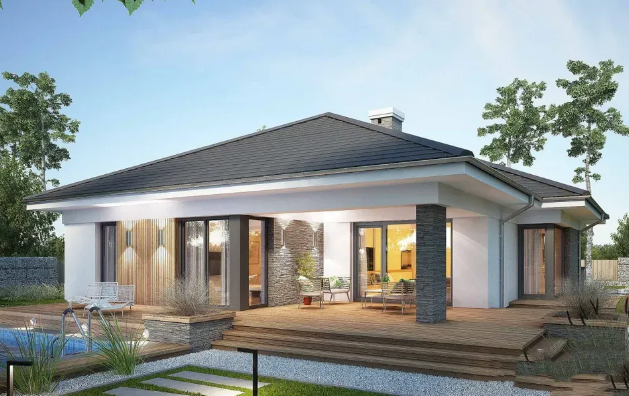
Furthermore, governments are actively steering the global housing market through subsidies and tax incentives for developers who utilize sustainable building practices. From utilizing low-carbon concrete to integrating solar-ready infrastructure, the environmental impact of new housing construction is now heavily regulated. Moving forward, the most profitable property development companies will be those that view ESG compliance not as a regulatory burden, but as a core component of their value proposition.
Navigating the Next Decade of Real Estate
The global housing market is not a monolith; it is a highly fragmented ecosystem driven by localized demographic trends, targeted government interventions, and the universal need for better, more efficient shelter. Whether it is the stabilization of China’s urban housing sector, the modular construction boom in Europe, or the single-family exurban expansion in the United States, the opportunities for strategic investment have never been more dynamic.
Understanding these shifts is no longer optional for industry professionals. We are entering an era where the intersection of climate resilience, affordable housing initiatives, and technological innovation will dictate property valuations and investment returns. The developers and investors who align their capital with these overarching trends—prioritizing efficiency, embracing alternative construction methods, and targeting areas of high demographic demand—will outpace the market over the next decade.
If you are looking to position your portfolio ahead of these macro shifts or need a customized analysis of how these global property development trends impact your specific local market, it is time to optimize your strategy. Connect with our advisory team today to access exclusive real estate investment data, high-yield property opportunities, and tailored consulting services designed to help you dominate your sector of the global housing market.