



The 2026 Swiss Real Estate Market Outlook: Navigating Global Volatility with Strategic Resilience and High-Yield Opportunities
As we move deeper into 2026, the global economic landscape continues to test the resolve of institutional and private investors alike. Having navigated multiple property cycles over the past decade as a real estate investment strategist, I can confidently say that the current environment is one of the most complex we have encountered. Uncertainty has rapidly transitioned from a temporary disruption to a permanent fixture. Yet, amidst the turbulence of geopolitical shifting and macroeconomic recalibration, one sector continues to demonstrate remarkable steadfastness. The Swiss real estate market outlook remains a definitive beacon of stability, offering a compelling blend of capital preservation, inflation-protected investments, and highly attractive risk-adjusted returns.
For investors seeking to optimize their real estate portfolio diversification, understanding the nuances of the Swiss property landscape has never been more critical. This comprehensive Swiss real estate market outlook for 2026 delves into the macroeconomic forces, demographic shifts, and commercial property investment trends shaping the industry, providing a strategic roadmap for maximizing yields in a deeply volatile global arena.
The Macroeconomic Crucible: When Uncertainty Becomes the Baseline Constant
To fully contextualize the Swiss real estate market outlook, we must first examine the global forces exerting pressure on capital markets. The year 2025 was largely defined by a high degree of economic policy uncertainty. The aggressive implementation of US import tariffs placed a noticeable and heavy burden on export-oriented economies across Europe and Asia. As we transitioned into 2026, geopolitical risks surged to the absolute forefront of institutional property investment strategies. The ongoing conflict in the Middle East has driven global commodity markets into a state of extreme volatility, simultaneously heightening fears of persistent stagflation across major Western economies.
Neighboring European nations are feeling these macroeconomic effects acutely, which is actively dampening their expected economic recovery timelines. However, in stark contrast, Switzerland continues to demonstrate exceptional economic resilience. When we evaluate the Swiss real estate market outlook, we must acknowledge the structural stabilizers unique to this nation. A structurally lower energy share in the consumer basket, rigorously regulated electricity prices, and the enduring strength of the Swiss franc all provide massive stabilizing effects against imported inflation.
While the franc’s historical role as a premier safe-haven currency inevitably increases margin pressure on Switzerland’s export sector, the domestic economy remains incredibly robust. According to our baseline scenario, Swiss GDP growth is projected to reach a highly respectable 1.1% in 2026. Concurrently, inflation is expected to settle at a thoroughly manageable 0.5%—slightly above previous expectations but still vastly superior to the inflationary pressures ravaging other European property markets. For wealth management real estate strategies, this low-inflation, stable-growth environment is the ultimate foundation for securing long-term capital preservation.
Stable Values in Turbulent Times: The Flight to Quality
In times of global distress, capital intuitively flows toward safety. This phenomenon was strikingly evident throughout 2025, which witnessed exceptionally high activity across the Swiss property market. Capital market transactions achieved record volumes, driven by institutional real estate investing mandates prioritizing downside protection. Residential property funds, in particular, saw an unprecedented surge in demand, a reality clearly reflected in consistently rising premiums across the board.

A central theme dominating our current Swiss real estate market outlook is the ongoing yield compression within defensive property segments. Over the past twelve months, we have observed significant yield compression in prime urban assets—a definitive sign of robust, unyielding demand for stable, fully leased properties operating within a relatively low-interest-rate environment.
Looking ahead, we expect the demand for premium Swiss real estate to remain exceptionally high throughout 2026 and into 2027. Investors are not merely looking for capital appreciation; they are aggressively targeting inflation-protected, highly predictable rental income. Real estate asset management in Switzerland offers a unique proposition: it provides invaluable diversification that effectively insulates broader investment portfolios from equity market shocks and bond yield volatility. Whether navigating residential or commercial property investment waters, the underlying promise of Swiss real estate remains its capacity to act as a definitive anchor in turbulent times.
The Urban Residential Space: Navigating the Dynamics of a Scarce Resource
No analysis of the Swiss real estate market outlook would be complete without a granular examination of the residential sector. Switzerland’s residential market is currently being propelled by a confluence of powerful structural and demographic megatrends. While net immigration in 2025 registered slightly below the record-shattering levels seen in the immediate post-pandemic years, it remains significantly above the long-term historical average. This sustained influx of highly skilled labor continues to place immense pressure on an already constrained housing supply.
Beyond immigration, deep-seated societal shifts are actively redefining housing demand. The rising trend of individualization (resulting in a higher number of single-person households), an aging demographic requiring specialized living arrangements, and relentless urbanization are coalescing to drive insatiable demand. This is particularly acute in primary economic hubs such as Zurich, Geneva, Basel, and the broader Lake Geneva region, as well as their surrounding urban agglomerations.
The core challenge—and the primary driver of asset valuation in the residential Swiss real estate market outlook—is the absolute scarcity of buildable land. Strict zoning regulations, prolonged permitting processes, and geographic constraints severely limit new construction. Consequently, vacancy rates are falling even further from their already historic lows, while asking rents are rising aggressively across almost all Swiss regions.
Furthermore, investors must closely monitor the Swiss mortgage reference rate. Given the gradual increase in long-term capital market interest rates, we project that the mortgage reference rate is highly likely to edge higher again in the second half of 2026. For property owners and those engaged in real estate asset management, this regulatory mechanism allows for corresponding rental increases, effectively transferring the cost of capital to tenants and preserving the inflation-hedging characteristics of the asset class. This dynamic makes urban residential property one of the most resilient and sought-after components of institutional property investment portfolios globally.
Global Commercial Challenges vs. Swiss Structural Resilience
The commercial real estate sector worldwide has been forced to navigate a gauntlet of systemic challenges over the past decade. When framing the commercial side of the Swiss real estate market outlook, we must acknowledge these global headwinds. Structural paradigm shifts, most notably the permanent entrenchment of mobile and remote working models, continue to severely dampen aggregate demand for traditional office space. Simultaneously, the relentless expansion of e-commerce continues to apply immense downward pressure on physical retail space, forcing a fundamental reimagining of the high street.
Conversely, the industrial and logistics real estate sector has benefited exponentially from these exact same developments, with last-mile delivery centers becoming highly prized assets. Adding to this complex matrix is the overall subdued economic momentum that has stubbornly persisted across global markets since the end of the Covid-19 pandemic.
However, when placed in an international comparison—and evaluated within a historical context—Switzerland’s commercial property investment landscape demonstrates a highly unique brand of resilience. The same population growth that so aggressively supports the residential market also exerts a profound, positive multiplier effect on domestic employment and consumer spending. This robust domestic consumption provides a critical tailwind for the commercial real estate sector in Switzerland.
In the prime office sector, we are witnessing a distinct “flight to quality.” While secondary office locations in peripheral zones are indeed experiencing rising vacancies and downward pressure on rents, Grade-A office spaces in central Zurich or Geneva remain highly coveted. Tenants are demanding ESG-compliant, technologically advanced workspaces to attract and retain top-tier talent. Therefore, a successful commercial property investment strategy in 2026 mandates a rigorous focus on prime locations and superior building quality.
Similarly, the Swiss retail sector, while evolving, is not collapsing. Experiential retail and mixed-use developments that seamlessly blend residential, retail, and leisure components are thriving. Wealth management real estate allocations are increasingly targeting these mixed-use assets to capture diversified income streams within a single property boundary.
Strategic Outlook: A Stable Anchor Requiring Active Asset Management
Synthesizing these varied macroeconomic, demographic, and sector-specific trends leads us to a definitive conclusion regarding the Swiss real estate market outlook for the remainder of 2026 and beyond. Despite the reality of rising long-term interest rates engineered in the wake of geopolitical conflicts and capital market volatility, we maintain our forecast for positive capital value growth across the Swiss property market in 2026. While this growth may be marginally weaker than the record-setting pace of the previous year, it represents highly sustainable, fundamentally backed appreciation.
The core fundamentals within the residential segment remain exceptionally robust. Driven by supply-demand imbalances, residential assets are firmly expected to deliver higher sheer capital growth than their commercial counterparts. However, commercial property investment remains incredibly attractive, especially for institutional capital that is willing to deploy sophisticated, active asset management strategies.
In today’s climate, passive yield collection is no longer sufficient. The commercial assets that will outperform in 2026 are those supported by hands-on real estate asset management—strategies that include green retrofitting for energy efficiency, aggressive tenant relationship management, and the adaptive reuse of underperforming spaces.
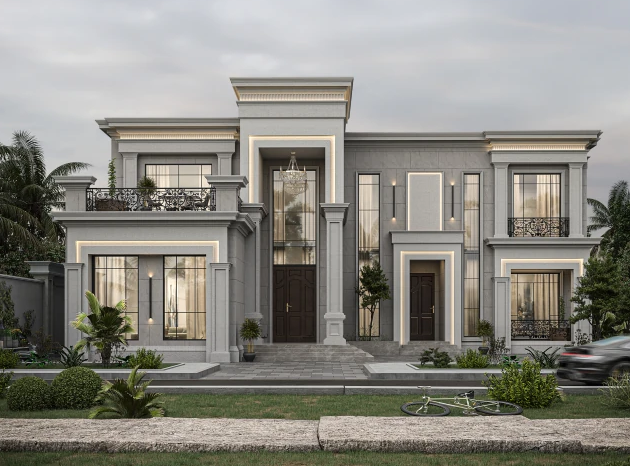
In addition to offering substantially higher running income yields compared to residential properties, commercial real estate continues to provide compelling acquisition opportunities. We are currently identifying assets in the market with materially more attractive risk premia and entry yields than we have seen in several years. Given the robust macroeconomic fundamentals, moderate and realistic valuations, the looming specter of increasing regulation in the residential sector, and the built-in protection of inflation-linked long-term commercial leases, commercial real estate firmly represents a highly appealing investment opportunity. It stands shoulder-to-shoulder with the residential segment as a mandatory component for holistic real estate portfolio diversification.
Navigating the Future with Expert Precision
Ultimately, the 2026 Swiss real estate market outlook is defined by a dichotomy: global fragility contrasted against localized Swiss fortitude. For investors, the question is no longer whether to allocate capital to Swiss real estate, but rather how to precisely calibrate that allocation to maximize risk-adjusted returns. The days of rising tides lifting all boats have passed; we are now in a market that heavily rewards deep local expertise, rigorous due diligence, and proactive real estate asset management.
By focusing on urban residential scarcity, capitalizing on the flight to quality in commercial property investment, and leveraging the unparalleled stability of the Swiss macroeconomic environment, investors can successfully utilize Swiss real estate as a powerful engine for wealth preservation and growth.
If you are evaluating your current allocations or looking to strategically position your portfolio to capitalize on the trends outlined in this Swiss real estate market outlook, I encourage you to connect with our advisory team. Let’s schedule a comprehensive portfolio review today to uncover how our decades of market expertise and active asset management strategies can help you secure stable, high-yielding opportunities in an unpredictable world. Reach out to us now to begin optimizing your real estate investment strategy for 2026 and beyond.