
2025–2030 Global Housing Market Forecast: Real Estate Investment Opportunities, Policy Shifts, and Emerging Trends
As a real estate analyst and developer with over a decade navigating the complexities of global property cycles, I have watched the global housing market transition through extreme boom-and-bust phases, supply chain disruptions, and historic monetary tightening. As we move deep into 2025, the landscape has fundamentally shifted. We are no longer operating in an era of cheap debt and unchecked speculative building. Instead, the global housing market is undergoing a massive structural realignment. This realignment is driven by stringent government policy interventions, evolving demographic demands, and an urgent push toward climate-resilient residential property development.
For institutional investors, builders, and urban planners, understanding the current global housing market is no longer just about tracking raw population growth. It requires a nuanced grasp of localized zoning shifts, high-yield real estate investment opportunities, and the macroeconomic headwinds dictating capital flow. With global demand for new housing hitting 53.0 million units in 2025, and projections showing a steady 2.7% compound annual growth rate (CAGR) pushing that number to 60.7 million units by 2030, the underlying mechanics of where and how we build are changing rapidly. This comprehensive housing market forecast 2025 breaks down the regional dynamics, the pivot toward sustainable building practices, and the actionable strategies required to navigate the next five years.
The North American Pivot: Single-Family Dominance and the Sun Belt Real Estate Boom
When analyzing the global housing market, North America currently presents one of the most fascinating divergence stories. For the past decade, urban high-density multifamily developers dominated the narrative, capitalizing on young professionals flocking to dense city centers. However, as we look at the residential property development pipeline today, the momentum has clearly shifted. The US housing market forecast reveals a strong pivot back toward lower-density, single-family projects.
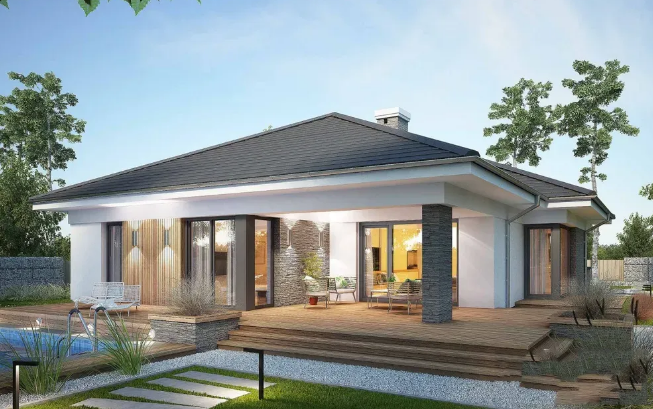
This is not a random occurrence; it is driven by hard demographic and economic data. The largest cohort of millennials is now squarely in its peak homebuying and household-formation years. Concurrently, improving income stability among this demographic is fueling demand for more square footage, home offices, and private outdoor spaces. Consequently, capital is aggressively chasing Sun Belt real estate and exurban developments where land acquisition costs remain palatable.
From an operator’s perspective, the multifamily sector is currently grappling with compressed profit margins. Rising urban vacancy rates, significantly tighter credit markets, and escalating localized construction costs have made high-rise developments inherently riskier. Single-family build-to-rent (BTR) communities, by contrast, offer developers a much faster turnaround time, lower upfront capital requirements, and highly attractive stabilization periods. For those looking for prime real estate investment opportunities, the North American exurbs offer a highly compelling risk-adjusted return profile, especially when paired with modern property management solutions that optimize tenant retention and lower operational overhead.
Asia-Pacific and China: Policy Interventions and the Correction of the Real Estate Bubble
You cannot discuss the global housing market without directly addressing the elephant in the room: China. For years, the Chinese property sector acted as the primary engine for global new housing construction. However, the fallout from the country’s well-documented real estate bubble has completely rewritten the playbook for the Asia-Pacific region.
Currently, new housing construction in China is severely constrained by an overwhelming oversupply of inventory, particularly in tier-three and tier-four cities. Decades of speculative building resulted in “ghost cities,” prompting Beijing to drastically tighten lending standards and deleverage major property developers. But this does not mean the Asia-Pacific segment of the global housing market is dead. Rather, it has fundamentally transformed.
To stabilize the economy, the Chinese government is aggressively pivoting toward state-backed affordable housing initiatives and large-scale urban renewal projects in key tier-one and tier-two urban centers. This targeted policy support aims to revitalize the core of the housing market by focusing on end-user demand rather than speculative investment. For foreign and domestic investors alike, navigating this region requires extreme precision. The high-CPC keywords of yesterday—speculative high-rise condos—have been replaced by secure, government-subsidized urban redevelopment contracts.
Across the broader Asia-Pacific region, rapid urbanization continues unabated. Emerging economies are leaning heavily on government-backed housing efforts to house their surging middle classes. The contrast here is incredibly sharp: you have highly advanced, ultra-modern luxury towers in financial hubs standing in stark contrast to the massive, ongoing efforts to formalize and upgrade informal settlements in developing neighboring nations.
Europe’s Dual Reality: Sustainability Mandates and the Legacy of the Eastern Bloc
Moving westward, the European footprint within the global housing market tells a tale of two very different geographies. In Western Europe, the entire residential property development sector is being dictated by aggressive ESG (Environmental, Social, and Governance) mandates and the pursuit of net-zero emissions.
Demand for energy-efficient, low-carbon housing is completely reshaping how developers operate in countries like Germany, France, and the UK. Driven by strict EU climate goals and evolving municipal building codes, sustainable building practices are no longer optional—they are the baseline requirement for securing construction permits and favorable financing. Because urban land scarcity is a critical bottleneck, Western European cities are heavily favoring urban infill and brownfield redevelopment. Planners are pushing to increase housing density near existing transit corridors and revitalized industrial zones. To offset severe labor shortages in the skilled trades, developers here are rapidly adopting modular construction methods and off-site prefabrication, which drastically reduce on-site waste and compress project timelines.
Conversely, the Eastern European segment of the global housing market faces a much steeper uphill battle. The region is currently constrained by persistent inflation, massive outflows of skilled construction labor, and chronically weak consumer confidence. Furthermore, Eastern Europe must address the massive legacy of its Soviet-era housing blocks. These aging, energy-inefficient concrete structures require billions in immediate renovation capital. However, fragmented ownership structures and broader demographic declines complicate large-scale rehabilitation efforts. For specialized investors, however, this presents unique real estate investment opportunities in the distressed asset and retrofit spaces, heavily subsidized by regional government grants.
Emerging Frontiers: Central & South America, Africa, and the Middle East
If you are seeking explosive raw growth within the global housing market, you must look to the emerging economies of the Global South. In Central and South America, residential property development is being propelled by steady middle-class expansion and continuous internal migration from rural areas to major economic hubs. However, much of the existing housing stock here remains informal or self-built, suffering from severe infrastructure deficits. Recognizing this, local governments are rolling out expansive affordable housing initiatives. Furthermore, due to the region’s exposure to extreme weather, new projects are heavily prioritizing climate resilience, such as flood-mitigation designs and reinforced structural engineering.
A similar trajectory is unfolding across Africa and the Middle East. Surging, youthful populations and rapid urban expansion are generating historic demand for new housing units. In the Middle East, high-net-worth real estate investment opportunities remain abundant in luxury sectors, but there is also a massive, underlying push for heat-ready, sustainable master-planned communities. In Africa, the focus is squarely on volume and affordability. Governments and international NGOs are partnering to launch large-scale affordable housing initiatives to replace substandard dwellings with safe, permanent, and scalable residential solutions.
The Innovation Imperative: PropTech, Modular Builds, and Upgrading Existing Stock
One of the most critical elements shaping the 2025–2030 global housing market forecast is the technological revolution occurring on the supply side. The traditional construction model is broken; it is too slow, too carbon-intensive, and too reliant on a shrinking pool of skilled manual labor.
To hit that 60.7 million unit target by 2030, the industry is widely adopting modular and off-site construction methods. By manufacturing home components in climate-controlled factories and assembling them on-site, developers can cut build times by up to 40% while dramatically reducing material waste. This is becoming a cornerstone of sustainable building practices worldwide.
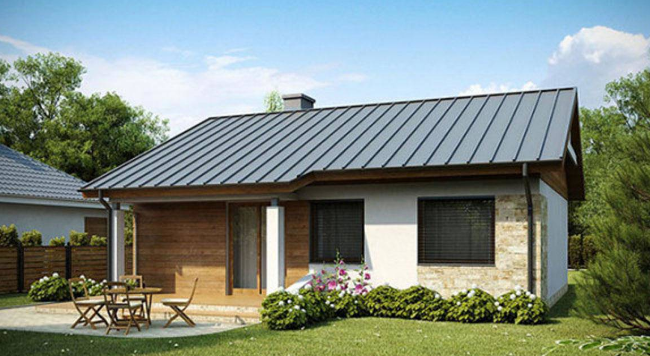
Furthermore, we must address the glaring issue of existing global housing stock. In North America and Western Europe, the vast majority of the housing inventory was constructed prior to 1980. This aging stock is fundamentally unequipped for modern energy efficiency standards or the integration of smart-home technology. Therefore, the global housing market is seeing billions of dollars pivot away from ground-up new construction and into the renovation, retrofitting, and modernization of existing units. Property management solutions integrated with IoT (Internet of Things) tech are allowing investors to upgrade these older assets, reduce their carbon footprints, and dramatically increase their rental yields.
Navigating the Future of Residential Real Estate
Ultimately, the global housing market in 2025 is not a monolith. It is a highly fragmented, highly localized ecosystem that requires deep, on-the-ground expertise to navigate successfully. In North America, the smart money is heavily leveraged in Sun Belt real estate and single-family suburban expansions. In Europe, capital is flowing into green tech, modular construction methods, and regulatory-compliant urban infill. Meanwhile, the Asia-Pacific, Latin American, and African markets represent the high-volume frontiers, driven by vital affordable housing initiatives and rapid middle-class maturation.
Despite these regional divergences, the common denominators across the entire global housing market remain clear: an urgent, universal need for resilient, energy-efficient, and structurally sound housing that can adapt to our changing economic and environmental realities. The developers and investors who align their portfolios with these macro trends—leveraging modern construction technologies and adapting to localized demographic shifts—will be the ones who capture the highest yields over the next decade.
If you are looking to position your portfolio ahead of these structural shifts, now is the time to refine your strategy. Reach out to our advisory team today to schedule a comprehensive portfolio review, and let us help you uncover the highest-yield real estate investment opportunities tailored to the 2025-2030 global housing market forecast.