



Navigating the 2026 Swiss Real Estate Market: An Expert Outlook on Stable Yields and Urban Demand
Over the past decade of structuring portfolios and advising institutional clients through various economic cycles, I have learned one undeniable truth: when global uncertainty becomes the baseline, capital aggressively seeks stability. As we move deeper into the first half of 2026, the global macroeconomic landscape remains intensely challenging. Yet, looking at the data, the Swiss real estate market stands out once again as a fortress of capital preservation and steady income generation.
The year 2025 tested the resilience of global markets. We saw aggressive US import tariffs place a heavy burden on export-oriented economies worldwide. As we transitioned into 2026, geopolitical risks—particularly the escalating conflicts in the Middle East—took center stage, driving commodity markets into severe volatility and resurrecting the specter of stagflation. Across Europe, these shockwaves are acutely felt, dampening previous hopes for a swift economic recovery.
However, Switzerland’s economic architecture provides a unique buffer, directly benefiting the Swiss real estate market. In an international context, the country’s resilience is remarkable. Our consumer basket features a significantly lower energy share compared to neighboring European nations, and regulated electricity prices have insulated domestic consumers from the worst of the global energy shocks. Furthermore, the undeniable strength of the Swiss franc acts as a massive stabilizing force. While the franc’s status as a global safe-haven currency undoubtedly pressures the export sector, it concurrently shields the domestic economy from imported inflation. Our baseline scenarios project Swiss GDP growth to reach a modest but reliable 1.1% in 2026, with inflation ticking up slightly to 0.5%—a highly manageable figure that continues to attract international capital looking for real estate portfolio diversification.
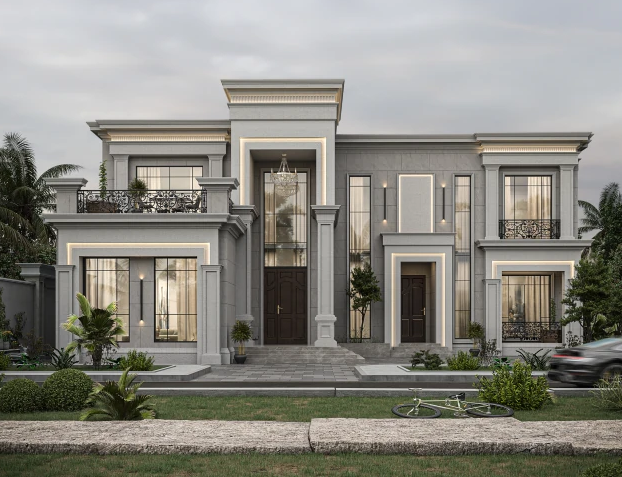
Stable Values in a Turbulent Financial Landscape
In turbulent times, institutional and private investors revert to fundamentals. This flight to quality drove exceptionally high transaction activity within the Swiss real estate market throughout 2025. We witnessed capital market transactions reach record-breaking volumes. Residential property funds, in particular, experienced massive demand, which was visibly reflected in the rising premiums on the Swiss stock exchange.
From an institutional perspective, defensive segments of the Swiss real estate market have seen continued yield compression. To the untrained eye, yield compression might signal an overheated market, but seasoned investors recognize it as the hallmark of insatiable demand for secure, well-leased properties within a low-interest-rate environment. We fully expect this robust demand for the Swiss real estate market to persist, and likely accelerate, through 2026. Real estate here is not just a hard asset; it is a strategic financial instrument that provides inflation-protected, highly predictable rental income. For capital allocators, it offers invaluable stability and acts as a critical anchor when equity and bond markets experience wild fluctuations.
The Residential Sector: Scarcity, Urbanization, and Structural Demand
To understand the enduring strength of the Swiss real estate market, one must look closely at the residential sector, which continues to be underpinned by powerful structural and demographic megatrends. While net immigration in 2025 cooled slightly compared to the record-breaking influx of prior years, it remains significantly above the long-term historical average. This steady population influx dictates baseline housing requirements that current development pipelines simply cannot meet.
Beyond immigration, profound societal shifts are reshaping the Swiss real estate market. We are seeing a distinct rise in individualization, characterized by an increasing number of single-person households. Coupled with an aging population and relentless urbanization, the structural demand for urban residential space is outpacing supply at an alarming rate. This dynamic is incredibly pronounced in major economic hubs. Investors targeting Zurich residential property or Geneva housing markets are finding exceptionally tight conditions. Vacancy rates across these urban agglomerations are plunging to historic lows, creating a landlord-favorable environment where rents are structurally forced upward across virtually all cantons.
Furthermore, we must factor in the cost of debt. Given the recent upward trajectory in long-term interest rates, the Swiss mortgage reference rate—a critical benchmark for the housing sector—is highly likely to edge higher again in the second half of 2026. For property owners, this regulatory mechanism allows for corresponding rental increases, providing a natural hedge against inflation and rising financing costs. Implementing the best real estate investment strategies today requires a deep understanding of these local regulatory frameworks, ensuring that net operating income (NOI) keeps pace with the broader macroeconomic environment.
Commercial Real Estate: Weathering Global Shifts with Local Resilience
Over the past decade, commercial rental markets globally have faced a barrage of structural headwinds. The fundamental nature of work and commerce has shifted. The widespread adoption of remote and hybrid work models has significantly dampened the aggregate demand for traditional office space in major global cities like New York and London. Simultaneously, the relentless expansion of e-commerce continues to apply immense downward pressure on brick-and-mortar retail footprints. Conversely, the logistics and light industrial sectors have emerged as the absolute winners of this transition, experiencing unprecedented growth and capital inflows.
Superimposed on these structural changes is the generally subdued global economic momentum that has lingered since the pandemic. Yet, when we isolate the commercial sector within the Swiss real estate market, a completely different narrative emerges. In both an international and historical context, commercial property investment in Switzerland remains remarkably robust.
Why does the Swiss real estate market defy the global commercial downturn? The answer lies in the holistic economic ecosystem. Our sustained population growth does not merely fuel the residential sector; it serves as a massive catalyst for domestic employment and consumption. More people require more services, more healthcare, more localized retail, and more administrative infrastructure. This demographic tailwind directly supports commercial property investment. Furthermore, Swiss corporate culture has seen a stronger “return to office” dynamic than many Anglo-Saxon countries, stabilizing prime office assets in central business districts.
Capitalizing on High-Yield Property Investments
Despite the undeniable strength of the residential sector, forward-thinking investors should not overlook the commercial segment when designing their real estate portfolio diversification strategies. While long-term interest rates have risen globally due to geopolitical frictions, we still forecast positive capital growth across the Swiss real estate market in 2026, even if the pace moderates slightly compared to the exuberance of 2025.
The fundamentals in the residential segment are undeniably bulletproof. Residential assets will likely continue to deliver higher relative capital growth than their commercial counterparts due to sheer scarcity. However, commercial properties offer a different, highly lucrative proposition: superior cash flow.
For investors seeking high-yield property investments, the commercial sector is where active real estate asset management truly shines. A passive “buy and hold” strategy may work for prime residential, but commercial assets require operational expertise to unlock value. Through strategic repositioning, ESG-compliant retrofitting, and aggressive tenant management, commercial property investment can yield substantial dividends.
Moreover, commercial properties currently present compelling acquisition opportunities. We are seeing materially more attractive yield spreads and risk premia in the commercial space compared to residential. In an environment characterized by moderate valuations and the continuous threat of increasing regulation in the residential sector (such as potential rent caps or stricter zoning laws), commercial real estate offers a highly appealing alternative. Many commercial leases are directly linked to the consumer price index (CPI), providing an immediate, contractual inflation hedge that residential properties can only achieve retroactively through the reference rate mechanism.

Strategic Regional Focus: Where Smart Capital is Deploying
Executing the best real estate investment strategies within the Swiss real estate market requires geographical precision. The country is not a monolith; it is a highly localized patchwork of distinct micro-economies.
In the Zurich metropolitan area, the engine of the Swiss economy, demand for prime office space remains highly competitive. The influx of global technology and financial firms continues to absorb Class-A office inventories, making commercial property investment here a cornerstone for institutional portfolios. Meanwhile, the life sciences boom in the Basel region has created an insatiable demand for highly specialized laboratory and R&D facilities—a niche asset class that provides incredibly sticky tenants and premium yields.
In the Lake Geneva region (Arc Lémanique), we see a dual-engine market. Geneva’s status as a diplomatic and wealth management hub sustains a vibrant luxury residential and prime retail sector, while neighboring Vaud is rapidly expanding as an innovation and logistics hub. Investors utilizing sophisticated real estate asset management are actively acquiring outdated secondary assets in these regions, repositioning them to meet modern ESG standards, and capturing the resulting “green premium” in their rental yields.
ESG and the Future-Proofing of the Swiss Real Estate Market
Speaking of green premiums, no professional analysis of the 2026 Swiss real estate market is complete without addressing Environmental, Social, and Governance (ESG) criteria. Over my ten years in the industry, the shift from ESG as a “nice-to-have” marketing buzzword to a non-negotiable metric of asset valuation has been the most profound change I have witnessed.
In 2026, the decarbonization of the built environment is a primary driver of capital expenditure. The Swiss real estate market is subject to increasingly stringent cantonal energy laws. Properties that fail to meet these evolving sustainability standards are facing accelerated obsolescence and severe brown discounts. Conversely, high-yield property investments are increasingly found in the “value-add” space—purchasing underperforming, energy-inefficient buildings, upgrading their thermal envelopes and HVAC systems, and reintroducing them to a market desperate for sustainable footprints. True real estate portfolio diversification now requires a balance not just of asset classes and geographies, but of carbon profiles.
The 2026 Outlook: A Stable Anchor for Discerning Investors
As we look toward the remainder of the year, the strategic imperative for investors is clear. The global macro environment will likely remain highly volatile, caught between the crosshairs of geopolitical conflict and shifting monetary policies. In this landscape, the Swiss real estate market is not just a safe harbor; it is a highly functional wealth-generating engine.
While the residential sector provides the ultimate defensive baseline due to severe supply-demand imbalances, the commercial sector offers the yield and value-add potential necessary to hit aggressive institutional return targets. Integrating both through diligent real estate asset management is the key to thriving in this current cycle.
Navigating this complex, high-barrier-to-entry market requires local expertise, deep relationships, and an unwavering commitment to data-driven asset management. Whether you are an institutional fund looking to optimize your real estate portfolio diversification or a private investor seeking resilient, high-yield property investments, the time to solidify your Swiss allocations is now, before the next wave of capital compresses yields even further.
If you are looking to reposition your portfolio for the challenges and opportunities of 2026, let’s connect. Reach out to our advisory team today to discover how our proprietary market insights and active asset management strategies can help you maximize your returns in the Swiss real estate market.