



Navigating the Swiss Real Estate Market: A Strategic Investment Outlook for 1H26
As an industry expert analyzing the European and global property landscape over the past decade, I have witnessed multiple economic cycles, geopolitical crises, and shifting monetary policies. Throughout these fluctuations, one truth has remained remarkably consistent: the Swiss real estate market consistently proves itself as a vital anchor of stability. As we progress through the first half of 2026, the global macroeconomic environment remains fraught with complexity. Yet, for institutional investors, family offices, and private buyers, the Swiss real estate market continues to offer compelling opportunities for capital preservation and steady yield generation.
When Global Uncertainty Becomes the Baseline Constant
To understand the current trajectory of the Swiss real estate market, we must first contextualize the broader global economic landscape. The year 2025 was characterized by a high degree of economic policy uncertainty. Sweeping US import tariffs placed a noticeable burden on export-oriented economies worldwide, and Switzerland was not entirely immune to these macroeconomic headwinds. However, as we entered 2026, geopolitical risks rapidly superseded trade disputes at the forefront of investor concerns.
The ongoing conflict in the Middle East has driven global commodity markets into periods of extreme volatility, reigniting dormant fears of stagflation across major Western economies. Europe is feeling these effects acutely, and the expected economic recovery on the continent has been noticeably dampened by high energy costs and fractured supply chains.

Against this turbulent backdrop, the Swiss real estate market stands out due to the broader resilience of the Swiss economy. In an international comparison, Switzerland benefits from several structural advantages. The country boasts a lower energy share in its consumer basket, highly regulated electricity prices, and a notoriously strong currency. The Swiss franc’s enduring role as a global safe-haven currency does increase pressure on the nation’s export sector, but it effectively insulates domestic consumers and property investors from the severe imported inflation seen in neighboring Eurozone countries.
Looking ahead, our baseline scenario projects Swiss GDP growth to reach a modest but healthy 1.1% in 2026. Simultaneously, inflation is now expected to stabilize at around 0.5%, slightly above previous baseline expectations but still remarkably low by global standards. This controlled inflationary environment is a critical catalyst for the continued strength of the Swiss real estate market.
Stable Valuations and the Flight to Quality
In times of global turbulence, capital inherently seeks safety, and the Swiss real estate market saw exceptionally high activity throughout 2025 as a direct result. Capital market transactions reached record volumes, driven largely by institutional capital and private wealth. Any robust real estate investment fund operating within Switzerland experienced significant inflows, with residential property funds being in particularly high demand. This intense investor appetite was clearly reflected in rising premiums across the board.
Defensive segments of the Swiss real estate market experienced further yield compression over the past twelve months. In professional wealth management real estate strategies, yield compression in core assets is widely recognized as a definitive sign of strong, sustained demand for stable, well-leased properties operating in a historically low-interest-rate environment. We expect the demand for the Swiss real estate market to stay exceptionally high throughout the remainder of 2026.
Why does this demand persist despite high entry costs? The answer lies in the fundamental nature of Swiss property assets. The Swiss real estate market consistently provides inflation-protected, predictable rental income. For global portfolios requiring valuable diversification, allocating capital to the Swiss real estate market provides unparalleled stability in fundamentally uncertain times.
The Scarcity Premium: Urban Residential Space Dynamics
Perhaps the most robust pillar of the Swiss real estate market is the urban residential sector. Switzerland’s residential property landscape continues to be heavily supported by undeniable structural and demographic trends. Although net immigration in 2025 was slightly below the record-breaking levels witnessed in previous years, it remains substantially above the long-term historical average. High-skilled workers, particularly in the pharmaceutical, technology, and financial sectors, continue to flock to major economic hubs.
Furthermore, demographic shifts such as the individualization of living arrangements (more single-person households) and an aging population are fundamentally altering housing requirements. Ongoing urbanization continues to support immense demand for apartments and luxury residential properties, particularly in primary cities like Zurich, Geneva, and Basel, as well as their surrounding urban agglomerations.
In these prime locations, the supply of available land is heavily restricted by stringent zoning laws and challenging topography, creating a permanent scarcity premium. Consequently, vacancy rates in the Swiss real estate market are falling further, dropping to historically low levels in prime urban centers. As a direct result of this supply-demand imbalance, rents are actively rising across almost all Swiss regions.
For property owners and those engaged in property asset management, these rising rents provide a strong buffer against operational costs. However, investors must also monitor the financing environment. Given the gradual increase in long-term interest rates globally, the Swiss mortgage reference rate is likely to edge higher again in the second half of 2026. While this may slightly increase financing costs for leveraged buyers, the robust rental growth in the Swiss real estate market heavily mitigates these margin pressures, keeping residential assets highly attractive.
Global Commercial Challenges versus Swiss Market Resilience
Over the past decade, commercial rental markets worldwide have faced numerous, heavily publicized challenges. Structural shifts in how we work and shop have permanently altered the commercial landscape. The increasing prevalence of mobile and remote working has severely dampened the demand for traditional office space in cities like New York and London. Concurrently, the exponential growth of e-commerce continues to put immense pressure on brick-and-mortar retail space.
While the logistics and industrial sectors have benefited significantly from these shifting paradigms, overall commercial momentum has remained subdued since the peak of the Covid-19 pandemic. However, when evaluating commercial real estate investing, it is crucial to recognize that the Swiss real estate market operates under a distinctly different set of parameters.
In both an international comparison and a historical context, Switzerland’s commercial real estate markets remain remarkably resilient. The persistent population growth mentioned earlier does not solely support the residential sector; it has a profound, cascading positive impact on domestic employment and consumer spending. This robust consumption provides significant tailwinds for the commercial sector within the Swiss real estate market.
Furthermore, the “return to office” mandate has been much more successful in Switzerland compared to Anglo-Saxon markets. The high quality of public transportation, shorter average commute times, and a strong corporate culture centered on physical collaboration mean that prime office spaces in central business districts like Zurich and Geneva remain highly sought after. Modern, ESG-compliant office buildings featuring high-end amenities are experiencing virtually no vacancy, allowing landlords to command premium rents.
Strategic Asset Management and Future-Proofing Portfolios
To truly capitalize on the Swiss real estate market in 2026, passive investment strategies are no longer sufficient. The current environment demands proactive, hands-on property asset management. Commercial real estate investing in Switzerland currently requires a distinct focus on tenant relations, energy efficiency upgrades, and adaptive reuse of space.
For a real estate investment fund, optimizing a commercial portfolio involves aggressive decarbonization strategies. The Swiss regulatory environment is increasingly prioritizing sustainability, and properties that fail to meet these evolving green standards face a real risk of becoming stranded assets. Conversely, assets that are proactively managed to achieve high ESG ratings benefit from a “green premium,” attracting elite corporate tenants willing to sign long-term, inflation-linked leases.
The retail segment of the Swiss real estate market, while facing the same e-commerce headwinds as the rest of the world, is finding stability through experiential retail and high-street luxury. Bahnhofstrasse in Zurich and Rue du Rhône in Geneva remain two of the most exclusive and highly demanded retail strips globally, largely immune to the fluctuations of the broader retail sector. Logistics, driven by the need for localized supply chains and last-mile delivery, remains a highly competitive and lucrative sub-sector for institutional players.
Strategic Outlook: A Stable Anchor in a Volatile Environment
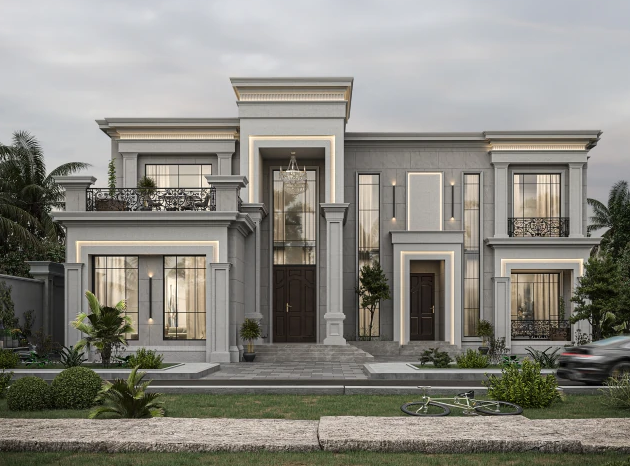
As we project into the latter half of 2026 and beyond, our outlook for the Swiss real estate market remains decisively confident. Despite the reality of rising long-term interest rates in the wake of geopolitical conflicts and high macroeconomic volatility, we still expect positive overall value growth across the Swiss real estate market, albeit at a somewhat more moderate and sustainable pace than the exceptional peaks of the previous year.
The underlying fundamentals in the residential segment remain uniquely robust. Driven by tight supply, continuous population growth, and strong household formation, residential assets within the Swiss real estate market are expected to deliver higher reliable capital growth than commercial properties over the next 12 to 18 months. The appeal of multifamily residential properties and luxury residential properties in key cantons will not wane, as they provide the ultimate defensive posture for capital preservation.
However, commercial properties remain highly attractive as well, particularly for investors seeking superior cash flow. When supported by active, intelligent property asset management, the commercial sector offers compelling advantages. In addition to offering higher running income yields compared to residential housing, commercial properties continue to provide compelling acquisition opportunities. Astute investors can identify assets with materially more attractive yields and favorable risk premia, especially in secondary cities or in the thriving logistics corridors outside major metropolitan hubs.
Given the deeply rooted robust fundamentals, moderate and logical valuations, the increasing but manageable regulation in the residential sector, and the immense security of inflation-linked long-term commercial leases, commercial real estate investing continues to represent a highly appealing opportunity. For anyone engaged in wealth management real estate structuring, balancing a portfolio with both premier Swiss residential assets and actively managed commercial spaces is the optimal strategy for the current financial climate.
Ultimately, the Swiss real estate market is not merely a place to park capital; it is a dynamic, sophisticated environment that rewards deep market knowledge and strategic foresight. The combination of economic stability, strict monetary policy by the Swiss National Bank, and unmatched quality of life ensures that Switzerland will retain its status as a premier destination for global real estate capital.
If you are looking to safeguard your capital, generate reliable yields, and strategically position your portfolio to weather global volatility, now is the time to evaluate your allocations. Reach out to our expert advisory team today to schedule a comprehensive portfolio review, and let us help you uncover the most lucrative and secure investment opportunities currently available in the Swiss real estate market.