



Navigating the Global Housing Market: 2025 Trends, Forecasts, and Real Estate Investment Strategies
Over the past decade of my career analyzing real estate cycles, managing property portfolios, and advising institutional developers, I have witnessed the global housing market undergo periods of intense volatility, massive speculative booms, and sobering corrections. However, the landscape we are navigating in 2025 is fundamentally different from the post-2008 recovery or the pandemic-driven frenzy of 2021. Today, the global housing market is undergoing a structural transformation shaped by chronic supply deficits, shifting demographic tides, and radical changes in how we finance and build residential properties.
If you want to understand where the smartest capital is flowing today, you have to look beyond the basic headlines. The intersection of local zoning policies, high interest rates, and evolving consumer preferences is creating a highly fragmented global housing market. Some regions are battling severe oversupply and deflating asset bubbles, while others face a desperate need for new housing construction just to keep up with explosive population growth.
In this comprehensive property market forecast 2025, we will dissect the macroeconomic drivers, regional nuances, and technological megatrends that are dictating the future of real estate investment. Whether you are allocating capital for a residential property investment fund or simply trying to understand the macroeconomic forces affecting local home prices, understanding the current global housing market is absolutely essential.
By the Numbers: The Global Housing Market Forecast
Let’s establish the baseline data. The demand for new housing construction worldwide is not slowing down; rather, it is shifting its locus. In 2025, global demand for new housing stands at an estimated 53.0 million units. Driven largely by chronic housing shortages in rapidly developing nations, this figure is forecast to grow at a compound annual growth rate (CAGR) of 2.7%, reaching 60.7 million units by 2030.
This growth in the global housing market is not evenly distributed. When analyzing the global housing stock—spanning data from 2015 through forecasts stretching to 2035—we see a profound divergence in what is being built and where. While advanced economies are heavily focused on upgrading existing residential floor space to meet stringent environmental standards, emerging markets are racing to build out millions of square meters of new residential floor space just to provide basic, formal shelter for a burgeoning middle class.
North America: The Single-Family Renaissance and Sun Belt Expansion

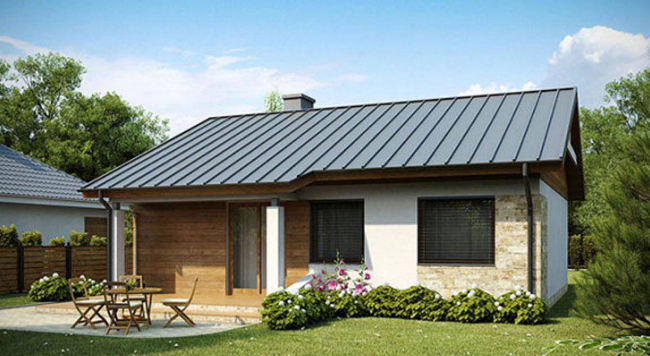
When evaluating the North American segment of the global housing market, the overarching theme is a distinct pivot back toward single-family developments. Over the last few years, we saw urban multifamily markets become saturated. Today, high vacancy rates in major downtown corridors, coupled with tighter lending standards and soaring construction costs, have severely compressed profit margins for high-rise developers.
Consequently, real estate investment capital is migrating. Developers and investors are aggressively targeting lower-density, single-family projects. This trend is being heavily heavily supported by the maturation of the millennial generation, who are now squarely in their peak homebuying years. As their income conditions stabilize, these buyers are demanding more space, pushing demand into the exurban rings and the lower-cost Sun Belt states where land acquisition remains economically viable.
From an investment perspective, single-family builds in the US and Canadian housing markets are increasingly attractive due to their faster turnaround times and lower upfront capital requirements compared to massive multifamily towers. For anyone involved in residential property investment, allocating capital toward single-family build-to-rent communities in domestic growth corridors currently represents one of the most stable plays in the North American global housing market.
Asia-Pacific: Policy Interventions, Urbanization, and the China Factor
You cannot discuss the global housing market without doing a deep dive into the Asia-Pacific region, and more specifically, China. For years, China was the undisputed engine of global new housing construction. However, the narrative has drastically changed. A massive oversupply of housing in small-tier cities, combined with a heavily restricted lending environment designed to deflate a precarious real estate bubble, has significantly hampered new construction volume in the country.
Yet, there is a counter-narrative emerging. The Chinese government is aggressively stepping in with policy support to revitalize its domestic real estate sector. The focus has decisively shifted away from speculative overbuilding toward heavily subsidized, large-scale affordable housing initiatives and targeted urban renewal projects. These government-backed efforts are designed to stabilize property values and drive sustainable growth in key, high-demand urban centers rather than sprawling ghost cities.
Across the broader Asia-Pacific region, rapid urbanization continues to be the dominant macroeconomic driver. From India to Southeast Asia, rural populations are migrating to urban centers at breakneck speeds. This demographic shift requires an astronomical volume of new housing units. Governments across the region are intervening with public-private partnerships to formalize housing stock, replacing informal settlements with modern, high-density residential buildings. For global real estate investment trusts (REITs), this region offers high-yield opportunities, provided investors can navigate the complex regulatory environments and currency risks.
Western Europe: Sustainability and the Green Premium
In Western Europe, the global housing market is being actively entirely rewritten by climate policy. The demand for energy-efficient, low-carbon residential property investment is no longer a niche market; it is the absolute baseline standard. Driven by aggressive European Union climate goals and increasingly strict municipal building codes, developers have no choice but to prioritize sustainable building practices.
The existing housing stock in Western Europe—much of which was built well before 1980—presents both a massive challenge and a lucrative opportunity. High-density rental housing characterizes much of this landscape, and the push to retrofit these aging structures for energy efficiency is spawning a massive secondary market for construction and property tech firms.
Furthermore, because cities like London, Paris, and Munich face severe land scarcity, new housing construction relies heavily on urban infill and brownfield redevelopment. We are seeing a surge in projects that increase housing density near vital transit corridors and revitalized industrial zones. For the sophisticated investor, the “green premium”—the increased asset value and rental yield commanded by highly sustainable buildings—makes Western Europe a prime target for ESG-focused real estate portfolio management.
Eastern Europe: Demographic Drags and Renovation Mandates
Moving east, the dynamics of the global housing market shift considerably. Eastern Europe faces a unique set of constraints that challenge both new housing construction and real estate investment yields. High inflation, severe localized labor shortages, and generally weak consumer confidence have suppressed the pace of new developments.
Perhaps the most defining characteristic of the Eastern European real estate sector is its legacy housing stock. The region is dominated by aging Soviet-era apartment blocks that are in desperate need of modernization. However, upgrading these structures is notoriously complex due to highly fragmented unit ownership and a lack of centralized capital. Coupled with a declining and aging population in several Eastern European nations, the focus here is heavily skewed toward renovation and maintenance of existing residential floor space rather than breaking ground on expansive new multi-family housing units.
Central and South America: Expanding the Middle Class
The trajectory of the global housing market in Central and South America is one of resilient, albeit uneven, growth. The primary catalyst here is the continued expansion of the middle class and persistent internal migration from rural territories to major metropolitan hubs. This demographic momentum generates a massive baseline demand for new housing units.
However, a significant portion of the historical housing stock in this region was self-built or exists informally, suffering from severe infrastructure deficits. The modern real estate market trends in Latin America are heavily focused on correcting these historical shortcomings. We are seeing a rise in master-planned communities and affordable housing initiatives backed by local governments eager to formalize their real estate economies.
Furthermore, due to the region’s exposure to extreme weather events, there is an increasing emphasis on climate resilience. Future-proofing assets against flooding and heat is becoming a standard operating procedure for new housing construction in the region, offering a compelling narrative for impact-driven real estate investment funds.
Africa and the Middle East: The Next Great Development Frontier
If you are looking for the highest volume of raw demand in the global housing market, you look to Africa and the Middle East. Surging, youthful populations and rapid, almost unprecedented urban expansion are fueling an urgent need for massive residential infrastructure. In many African nations, the deficit of formal housing numbers in the tens of millions of units, leaving substandard dwellings widespread.
To combat this, we are witnessing the implementation of large-scale affordable housing initiatives, often financed through international partnerships and sovereign wealth funds. In the Middle East, particularly in the Gulf nations, new residential property investment is characterized by hyper-modern, heat-ready designs and sprawling master-planned cities built essentially from scratch. The sheer scale of new residential floor space being added to this region’s housing stock will make it a major driver of global construction expenditures through 2035.
Megatrends Disrupting New Housing Construction
You cannot maintain a decade-long track record in real estate without recognizing that how we build is changing just as fast as where we build. Across every region of the global housing market, systemic labor shortages are crippling traditional construction schedules and inflating budgets. To mitigate this risk, the industry is undergoing a technological revolution.
The Rise of Modular Construction Methods
Modular and off-site construction methods are rapidly moving from the fringes to the mainstream. By manufacturing housing components in controlled factory environments, developers can drastically reduce build times, minimize material waste, and bypass the bottleneck of skilled on-site labor shortages. This is particularly prevalent in Western Europe and North America, where labor costs eat heavily into project margins. Incorporating modular construction methods is becoming a non-negotiable strategy for developers looking to scale affordable housing initiatives efficiently.
Sustainable Building Practices as an Economic Necessity
We touched on this regarding Europe, but sustainable building practices are impacting the entire global housing market. This is no longer just about public relations; it is about asset preservation and securing favorable financing. Institutional lenders and commercial real estate trends heavily favor developments that can boast net-zero carbon footprints and high energy efficiency ratings. Properties that fail to meet these evolving standards risk becoming “stranded assets” that cannot be easily sold or refinanced.
The Deep Divide: Aging Housing Stock vs. Modern Demands
A critical underlying vulnerability in the global housing market today is the stark disparity in the quality of existing housing stock. In mature markets like North America and Western Europe, the prevailing issue is obsolescence. The vast majority of the housing supply was built for a different era—before the advent of remote work, electric vehicles, and extreme climate volatility. The capital required to retrofit these aging single-family and multifamily housing units is staggering, creating robust opportunities in the value-add real estate investment sector.
Conversely, in emerging markets across Asia, Latin America, and Africa, the contrast is visually jarring. Gleaming, hyper-modern residential towers in financial districts often stand mere miles away from vast informal settlements. The mandate for governments and private capital in these regions over the next decade is formalization—converting undocumented, vulnerable dwellings into safe, legally recognized housing stock that can be taxed, insured, and leveraged for generational wealth.
Strategic Real Estate Portfolio Management in 2025
So, how does a sophisticated investor, developer, or fund manager synthesize this data? The global housing market in 2025 demands a surgical approach to capital allocation. The days of throwing a dart at a map and riding broad, macro-level appreciation are over. High-CPC keywords like commercial real estate trends and mortgage interest rates dictate that capital is expensive, meaning every project must underwrite flawlessly.
For those focusing on North America, the data suggests leaning heavily into Sun Belt single-family housing units. If your mandate includes Europe, target distressed, older multi-family assets that can be acquired at a discount, retrofitted with sustainable building practices, and repositioned to capture the green premium. For investors with a higher risk appetite, partnering with government-backed affordable housing initiatives in the Asia-Pacific or Middle East regions offers unparalleled scale and potentially massive, long-term yields.
The global housing market is not a monolith; it is a complex, interconnected web of local economies, zoning laws, and demographic realities. Success over the next decade will belong to those who understand these regional nuances and utilize modern construction technologies to deliver the right product, in the right market, at the right time.
If you are looking to recalibrate your residential property investment strategy or want a deeper dive into the localized data shaping these macro trends, we need to talk. Reach out to my advisory team today to schedule a comprehensive portfolio review, and let’s ensure your real estate assets are positioned for maximum resilience and growth in the evolving 2025 market.